

BIKKOA® STORIES / ENDURANCE JOURNAL 001
BEYOND THE LIGHT.
A story of ultra-trail, endurance, and adaptive vision.
Mountain Running · Ultra Distance · APT™ Photochromic Technology
A fictional editorial story inspired by ultra-trail culture. Vera is a fictional character.
Before the light appears.
It is 4:17 in the morning.
The mountain is still asleep. The air is cold, the trail is barely visible under the light of a headlamp, and the silence is broken only by the sound of running shoes striking the damp earth.
Vera has been awake for several hours. In front of her lies a 100-kilometer traverse through the Pyrenees, with thousands of meters of accumulated elevation gain and a succession of climbs, descents, and terrain that will test much more than her physical condition.
She does not think about the full distance. She never does.
She thinks about the next section. Her breathing. Finding the right pace before the elevation gain starts demanding more from her.
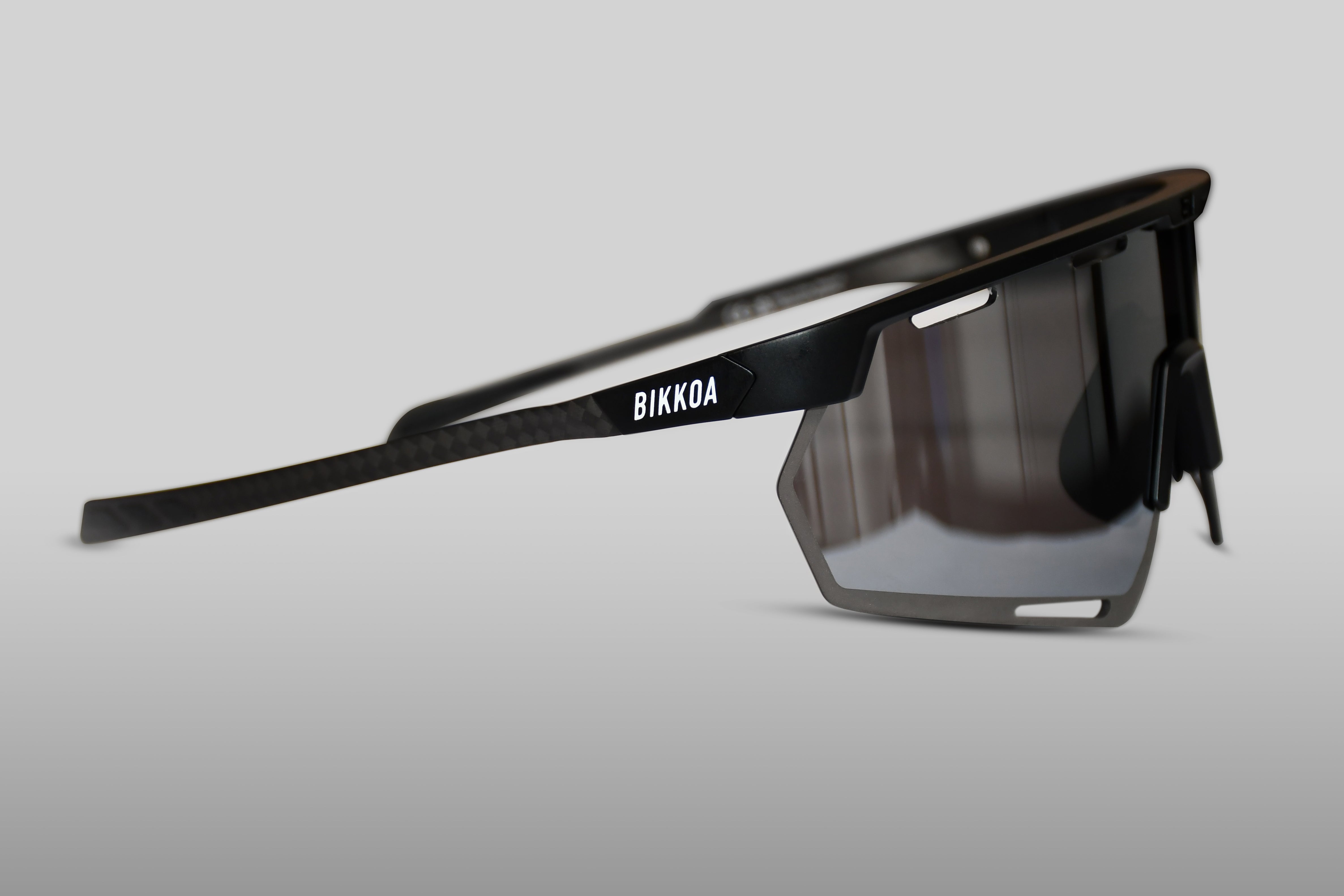
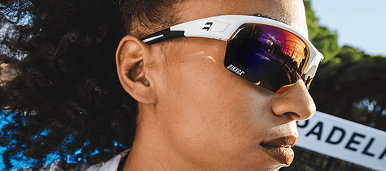
Resting on her head are BIKKOA® photochromic glasses with APT™ technology. They are part of her gear for when dawn arrives and the mountain begins to change its appearance.
In ultra-trail, conditions never remain the same for very long.
Neither does the light.
THE MOUNTAIN CHANGES.
YOUR VISION ADAPTS.
BIKKOA® APT™ TECHNOLOGY
Kilometer 18. The first sunrise.
The sky begins to brighten behind the mountains.
First, a blue band appears. Then, a soft light sketches the ridgelines and reveals the texture of the trails. The forest gives way to an open area, and the first rays of sunlight reach the valley.
Vera stops for a few seconds. She turns off her headlamp, drinks some water, and puts on her glasses.
The mountain that just minutes ago seemed like a dark, unfamiliar place now becomes a landscape of rock, vegetation, and narrow paths.
It is one of the things she likes most about running long distances: discovering how the same route can transform completely as the hours pass.
Its APT™ Adaptive Photochromic Technology lenses react to ultraviolet exposure and progressively modify their light transmission.
When UV radiation increases, the lenses darken. When it decreases, they gradually become clear again.
This capability is especially valuable in trail running and ultra-trail, where a single training session can pass through forests, mountain passes, shaded areas, and open spaces under the sun.
A technology designed to accompany athletes in changing lighting conditions.
01 / THE TECHNOLOGY
APT™. Adaptive Photochromic Technology.
At BIKKOA®, we understand that vision is part of the sporting experience.
That is why our collection of APT™ photochromic sports glasses is designed for athletes who train and compete in settings where the light changes continuously.
APT™ technology — Adaptive Photochromic Technology uses photochromic lenses that respond to ultraviolet radiation to progressively adjust their level of darkening.
A versatile solution for endurance disciplines such as running, trail running, ultra trail, cycling, gravel and triathlon.
One lens. Different light conditions.
During a mountain outing, a runner may go from a trail sheltered by trees to a ridge fully exposed to the sun.
Photochromic running glasses make it possible to handle these transitions with a lens that gradually adapts its light transmission to the UV radiation conditions.
The speed of adaptation may vary depending on temperature, ultraviolet radiation and environmental conditions.
UV400 protection for mountain sports.
Sun exposure is part of any outdoor sporting activity.
In the mountains, altitude, hours of exposure and reflection from certain surfaces make eye protection especially important.
APT™ lenses incorporate UV400 protection, an important feature for athletes who spend many hours training outdoors.
Visual comfort on changing terrain.
Roots, stones, changes in elevation, shadows and surface changes are all part of the natural trail-running environment.
Choosing sports glasses with suitable optical quality, a wide field of vision and a lens appropriate for the light conditions can contribute to visual comfort during exertion.
Because in the mountains, every detail of the terrain matters.
Kilometer 43. Where the forest ends.
The trail climbs to an exposed pass.
The wind changes direction. The vegetation disappears and the ground becomes a succession of uneven stones.
Vera slows her pace.
She learned long ago that running faster does not always mean making better progress.
In the mountains, efficiency also means knowing when to walk, when to eat and when to conserve energy.
The sun reflects off the light-colored rocks. The light intensity is very different from what she encountered in the forest.
Your BIKKOA® APT™ photochromic glasses have gradually darkened as UV exposure has increased.
You don't need to stop to replace clear lenses with darker ones.
Keep moving forward with the same pair of glasses.
In an ultradistance competition, where every piece of equipment must support the athlete for many hours, this versatility takes on special significance.
It is not about running more kilometres because of a pair of glasses.
It is about choosing equipment capable of adapting to the environment.
PERFORMANCE VISION
NOT EVERY CHALLENGE
IS MEASURED IN DISTANCE.
02 / THE DISCIPLINE
Ultra-trail running. The art of staying in motion.
Ultra-trail running is a discipline that demands physical endurance, mental preparation and adaptability.
Unlike a road race, a mountain competition may involve prolonged climbs, technical descents, narrow trails, changing weather and significant temperature variations.
Distances of 50, 80, 100 or more kilometres present different challenges, but share the same reality: athletes must manage their resources over an extended period.
Nutrition, hydration, footwear, technical clothing and route planning are essential.
It is equally important to select mountain running glasses suitable for the expected conditions.
Why use photochromic glasses for ultra trail?
During a long-distance race, it is common to encounter different levels of light throughout the day.
Photochromic trail running glasses offer a versatile solution because their lenses can progressively lighten or darken depending on ultraviolet exposure.
This is useful on routes that alternate between forests, open tracks, climbs to higher elevations and shaded descents.
Photochromic technology does not replace front lighting at night or guarantee sufficient visibility in every circumstance. It is important to use lenses with a category and light transmission appropriate for each situation.
Lightness, stability and comfort for hours.
In an endurance race, comfort is a priority.
Ultra-trail sports glasses should offer a balanced combination of lightness, ergonomics and stability.
A good fit helps prevent shifting during descents, while a comfortable frame reduces discomfort associated with prolonged use.
Ventilation is also important, especially during intense climbs or in humid conditions.
Therefore, when choosing mountain running glasses, it is advisable to consider both the lens and the frame design, as well as how they fit the face.
Kilometre 67. When the mountain decides.
The sky has clouded over.
A cloud passes through the valley, and the landscape loses some of the intensity it had barely half an hour earlier.
Vera has been moving for more than ten hours. Her legs are beginning to feel the accumulated elevation gain, and the descent ahead demands concentration.
The rocks are wet. Some roots cross the trail, and the vegetation reduces the amount of light entering.
The environment has changed again.
With less UV exposure, the photochromic lenses gradually begin to clear.
Vera adjusts her pace to the terrain.
At this point, she is no longer thinking about the finishing time.
The focus is on moving forward safely, maintaining controlled downhill technique, and conserving energy for the remaining miles.
It is precisely in these moments that ultra trail reveals its true nature.
Managing effort and adapting are just as important as speed.
03 / THE EQUIPMENT
BIKKOA® APT™. Photochromic Eyewear for Endurance.
The BIKKOA® APT™ photochromic eyewear collection follows one philosophy: to develop technical eyewear for athletes who train in environments where lighting changes throughout the route.
From the first hours of the day to sun exposure on the road or in the mountains, photochromic lenses offer a versatile alternative for athletes seeking eye protection and visual comfort.
Our APT™ collection includes different design options for disciplines such as running, cycling, gravel, and trail running.
STRATOX APT™
A technical eyewear design with a carbon structure, intended for athletes who value lightness, design, and adaptive vision.
ELION APT™
A wraparound sports design created to provide coverage and visual comfort during extended outdoor activities.
NEXORA APT™
A panoramic shield design that combines a technical aesthetic with a wide field of vision and an immersive visual experience.
04 / THE KNOWLEDGE
How to choose the best photochromic sunglasses for trail running.
Not all photochromic sunglasses are the same. Before choosing photochromic running sunglasses, it is worth considering the conditions in which they will be used.
01. Light Transmission.
The filter category indicates the level of visible light transmission. For routes with changing light conditions, a lens with a wide adaptation range may be worth considering.
02. UV Protection.
Sunglasses for outdoor sports must offer adequate ultraviolet protection. The darkness of a lens alone does not determine its ability to block UV rays.
03. Field of vision.
A wide field of vision makes it easier to observe the surroundings and can be especially practical during technical descents.
04. Fit and stability.
The frame must fit the face correctly and remain stable during the movements involved in running.
05. Ventilation.
Air circulation around the lens is important in humid conditions or during intense exertion, when fogging may occur.
06. Long-distance comfort.
In ultra trail competitions, lightness, weight distribution and the absence of pressure points take on particular importance.
Kilometer 91. The last light.
The sun begins to disappear behind the mountains.
Vera has left the last major climb behind. She has nine kilometers left and a gradual descent to the valley.
Her body is tired. Her breathing is deeper and her movements require an awareness that seemed automatic at the start of the day.
She has crossed dark forests, sunlit ridges, windy areas and damp trails.
The light has changed so many times that it is difficult to remember what the landscape looked like at dawn.
Now, as solar radiation decreases, her APT™ lenses gradually return to a clearer state.
Vera knows that, if the darkness increases, she will need to use her headlamp again and make sure the lenses provide suitable visibility.
Ultra trail requires constant decision-making.
Some concern pace. Others concern nutrition, rest or equipment.
The mountain does not adapt to the runner.
It is the runner who learns to adapt to it.
ENDURANCE IS NOT
ABOUT GOING FASTER.
IT IS ABOUT GOING FURTHER.
05 / THE FINISH
Kilometer 100. Beyond the Light.
When Vera reaches the end, it is already night.
There is no crowd waiting. Just a few lights, the sound of the wind and the quiet satisfaction of having completed the course.
She stops. She looks toward the mountains and remembers the first hour of the morning.
Almost an entire day has passed since she started running.
She has experienced different versions of the same landscape and different versions of herself.
For some kilometers she felt strong. During others, every step seemed to require a negotiation.
But she kept moving forward.
Because for Vera, ultra trail was never just about distance.
It was a way to discover how far she could go.
And learning to observe the world as she did.
The mountain will still be there tomorrow. The light will change again.
There will be new trails, new conditions and new distances.
The story continues.
BIKKOA® Eyewear. Performance Vision for Endurance Athletes.
At BIKKOA®, we believe that vision is part of the sporting experience.
From trail running and ultradistance races to cycling, gravel and road Running, we develop eyewear designed for those seeking protection, comfort and visual performance.
Our technology APT™ Adaptive Photochromic Technology represents this philosophy: adapting the lens to changes in light to accompany athletes during outdoor activities.
Because every route is different.
Every mountain has its own light.
And every athlete finds their own way to move forward.
BIKKOA® EYEWEAR
VISION IS PERFORMANCE.
Discover APT™ Photochromic EyewearFrequently asked questions about photochromic eyewear for ultra trail.
What eyewear is recommended for an ultra trail?
For long-distance mountain races, it is advisable to choose lightweight, stable sports eyewear with UV protection and lenses suited to the light conditions. Photochromic eyewear can be especially practical when the route alternates between sun and shade.
Is photochromic eyewear good for trail running?
Yes, they can be a versatile option for training and competitions with changing lighting conditions. Their ability to progressively adjust light transmission helps manage different levels of sun exposure.
What is BIKKOA®'s APT™ technology?
APT™ stands for Adaptive Photochromic Technology. It is BIKKOA®'s photochromic technology, designed to adapt lens darkness to ultraviolet radiation during outdoor sports activities.
Is photochromic eyewear suitable for running at night?
It depends on the light transmission and filter category of each lens. To run at night, it is necessary to have adequate lighting and use lenses suitable for low-light conditions. Photochromic technology does not replace a headlamp.
What is the difference between polarized and photochromic eyewear?
Polarized lenses are designed to reduce certain light reflections. Photochromic lenses change their level of darkness in response to UV radiation. These are different functions that should be chosen according to the athlete's needs.
Where can you buy BIKKOA® photochromic eyewear?
You can discover the available models and view the features of APT™ technology in the BIKKOA® photochromic eyewear collection.